
Elbow maker CEM Ultra
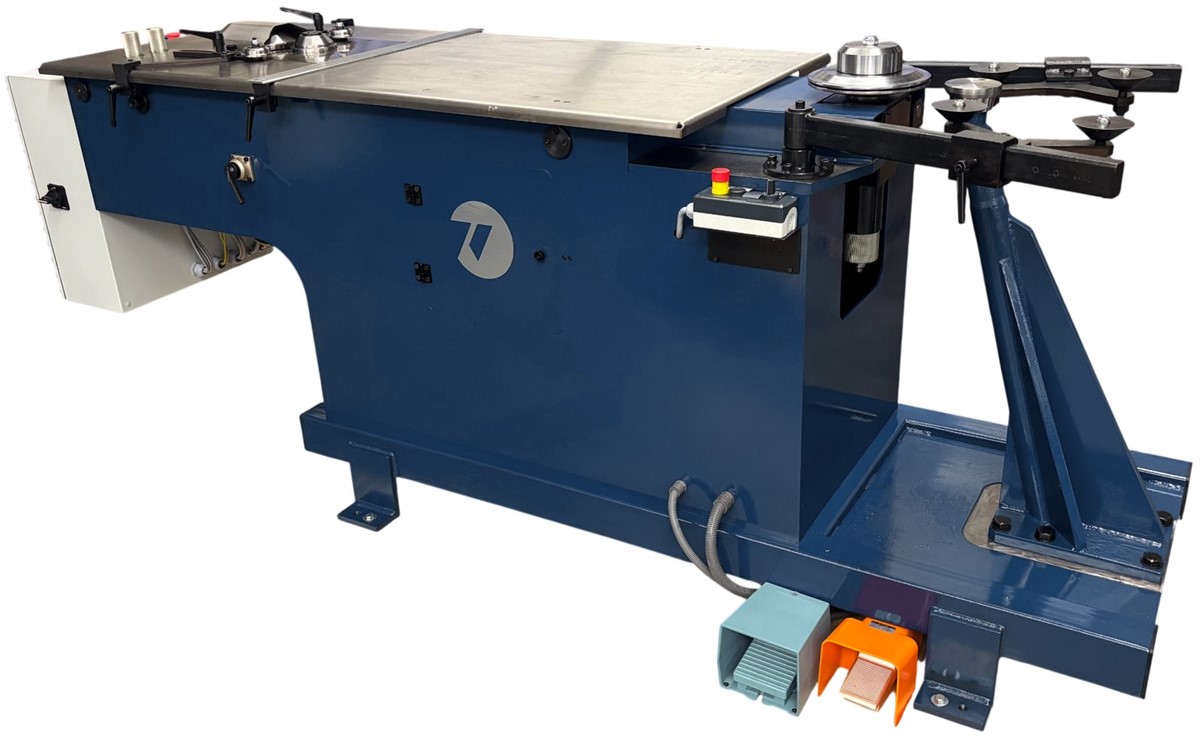
The WAMMES CEM Ultra produces round and oval segmented elbows from Ø 100 to 1,250 mm at up to 120 m/min, sheet thickness up to 1.25 mm. Flanging and closing station are integrated in one table; the machine is built and serviced in Wiebelsheim, Germany.
- Ø 100–1,250 mmRound and oval elbows
- 0.4–1.25 mmSheet thickness, galvanised steel
- 120 m/minWorking speed
- 2 stationsFlanging and closing
CEM Ultra or CEM Eco?
- Fully hydraulic, strong and fast
- Ø 100–1,250 mm
- Sheet thickness 0.4–1.25 mm
- Electric drive, pneumatic feed
- Ø 125–1,250 mm
- Compact, 2.4 m long
Your advantages
- Two stations at onceFlange on the left, close on the right – both at the same time on one table.
- Airtight without weldingThe double seam joins the segments positively and airtight to the requirements for air ducts – without welding.
- Ø 100 to 1,250 mmThree roll sets for 5, 7.5 and 10 mm flange height are included – for small and large elbows, round and oval.
Segmented elbow
Machine
Connections
Subject to technical changes. The details in the quotation are binding.
More advantages
- Fully hydraulic Strong and fast, built for series production.
- Stainless steel too Stainless steel from 0.4 to 0.8 mm.
- Flange change by lever A lever raises or lowers the table – from single to double flange without changeover.
- Low maintenance No lubrication needed; flanging and closing tools made of hardened steel.
- Built in Wiebelsheim Design, manufacture, service and spare parts from a single source.
To the segmented elbow in four steps
- Prepare segments The segments arrive cut, rolled and joined lengthwise.
- Flanging (left) The forming rolls form a single 90° flange and a double, stepped flange at the edges. A lever raises or lowers the table for this.
- Join Two segments with different flanges are pushed into each other.
- Closing (right) Closing discs and pressure roll close the seam positively and airtight. Flanging and closing run at the same time.
Segmented elbows redirect the air in circular ducts. The CEM Ultra joins the segments with a double seam – positive and airtight, without welding.
- Round and oval: oval elbows are made in the same way as round ones.
- Also reducers and end caps in segmented design.
- Flange height by diameter: 5 mm for small, 7.5 mm from Ø 250 mm, 10 mm from Ø 750 mm (guide values).
- Segment angle up to 30° per segment.
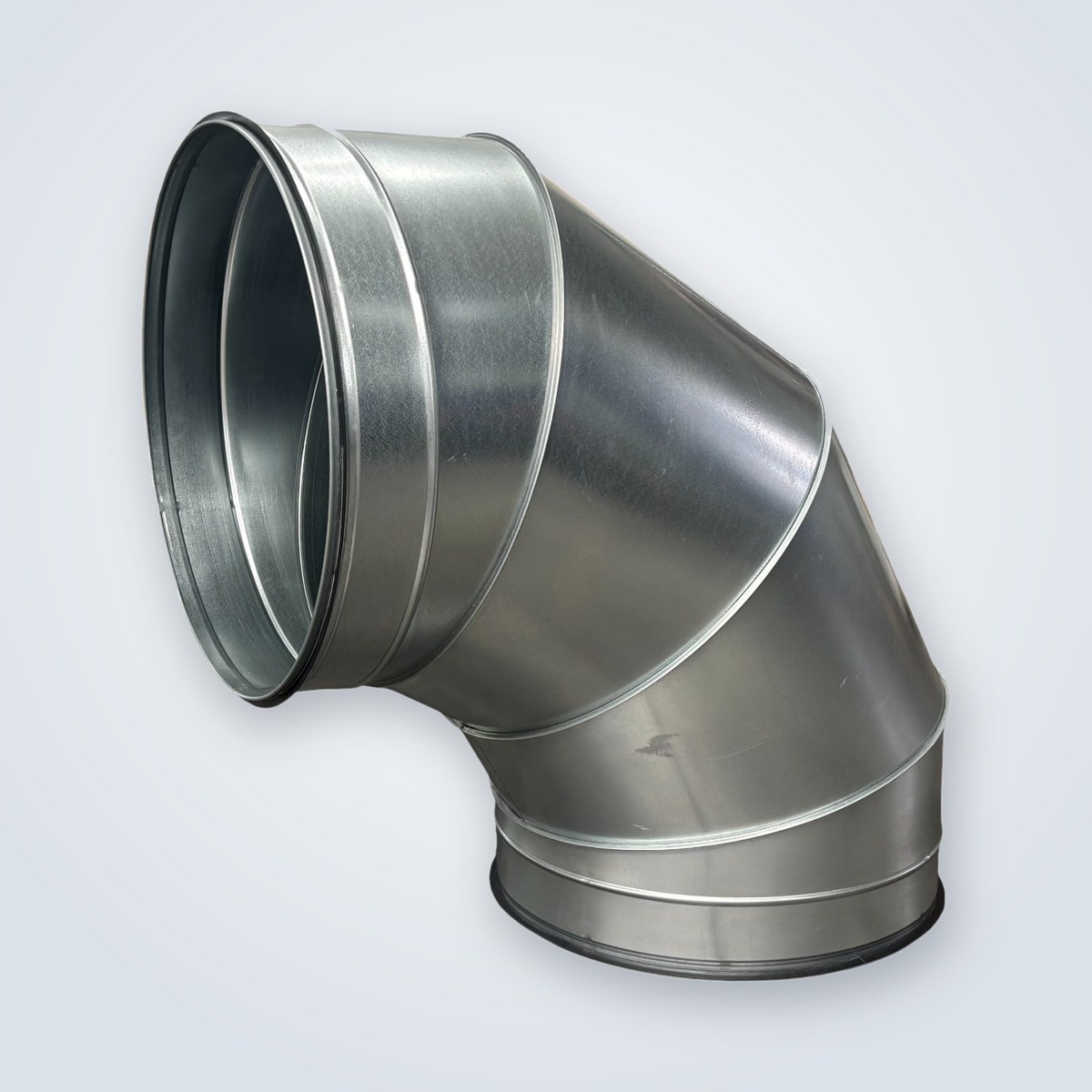
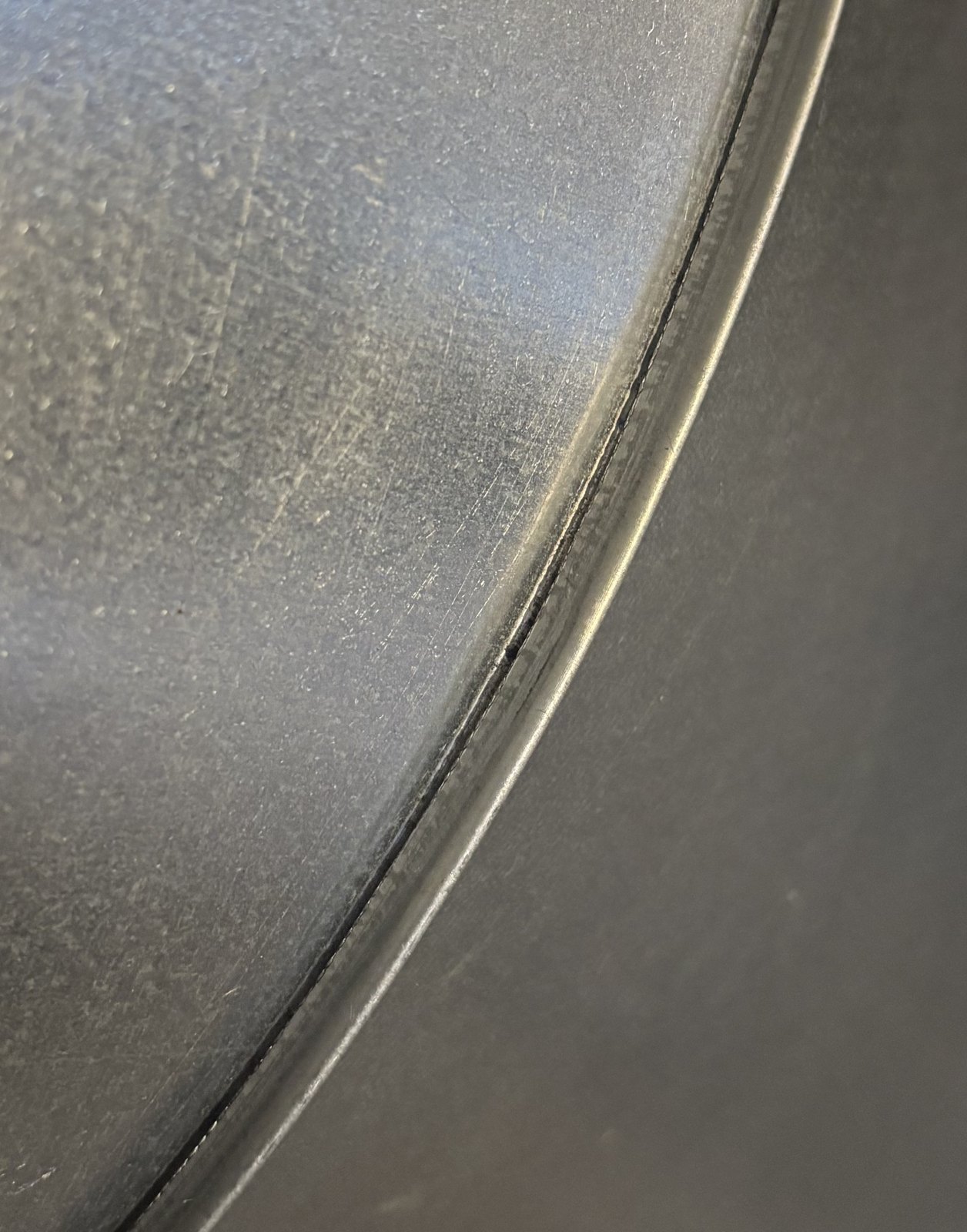
Airtight to the requirements for air ducts; EN 12237 covers strength and leakage of circular ducts.
Tap an image to enlarge. Tap again or × to close it.
Scope of delivery
- Machine frame with work table, control cabinet and controls at the flanging and closing station
- Hydraulic power unit
- Forming roll sets for 5, 7.5 and 10 mm flange height (2 rolls each)
- Closing tools: lower and upper closing disc, pressure roll, two support arms and support rolls each for small to large diameters
- Guide rolls of the flanging station left and right, spacer plate for small and large diameters
- Additional rolls for closing end caps
The scope of delivery may vary depending on the order.
Segmented elbows are fittings of circular air ducts: dimensions to EN 1506, strength and leakage to EN 12237.
What applies
- EN 1506:2007 – dimensions of circular sheet metal air ducts and fittings: nominal diameters and tolerances. The standard does not specify a sheet thickness.
- EN 12237:2003 – requirements and test methods for strength and air leakage of circular sheet metal ducts, with air tightness classes A to D (D is the tightest).
- EN 16798-3:2025 – defines air tightness classes for ductwork systems with new names (ATC 7 to ATC 1). Future editions of EN 12237 are to adopt these names.
What matters in an elbow
- Accurate diameter. Only then does the elbow fit ducts and fittings, including those from other manufacturers.
- Closed, even seam. It determines the strength and tightness of the elbow.
- Suitable flange height. Larger diameters need a higher flange.
EN 1506 and EN 12237 do not specify a sheet thickness per diameter. The CEM Ultra processes galvanised steel from 0.4 to 1.25 mm and stainless steel from 0.4 to 0.8 mm. Editions checked on 18 November 2026.
In use
Tap a field for the explanation.
Ventilation elbows Segmented elbows for circular ducts
For every change of direction in a circular network, from Ø 100 to 1,250 mm – in series or as a single piece.
Oval elbows on the same machine
Oval segmented elbows are made on the same machine and in the same way as round ones.
Reducers and end caps further fittings in segmented design
With the same machine you also produce reducers and end caps in segmented design.
Is the CEM Ultra right for your elbow production? We advise you on diameters, material, roll sets and installation.
Request a quoteVideo
Play video
-
 Oval segmented elbows on the CEM Ultra
One click starts the video here on the page. Only then is a connection to YouTube established; YouTube's privacy policy applies.
Demonstration in Wiebelsheim
See the CEM Ultra in operation before you decide. At our plant we produce trial elbows – with your material or with ours.
- with your sheet or our material
- elbows in your diameter, round or oval
- advice on roll sets and installation
Frequently asked questions
Click a question to see the answer. Click again to close it.
Which fittings does the CEM Ultra produce?
Round and oval segmented elbows as well as reducers and end caps in segmented design.
Which diameters and sheet thicknesses are possible?
Ø 100 to 1,250 mm; galvanised steel 0.4 to 1.25 mm, stainless steel 0.4 to 0.8 mm.
How are the segments joined?
At the flanging station a single 90° flange and a double, stepped flange are formed. The segments are pushed together and closed positively and airtight at the closing station – without welding.
Can flanging and closing run at the same time?
Yes. The flanging station on the left and the closing station on the right work independently on one table.
Which roll sets are included?
Three forming roll sets for 5, 7.5 and 10 mm flange height. Guide values: 5 mm for small diameters, 7.5 mm from Ø 250 mm, 10 mm from Ø 750 mm.
How do I switch between single and double flange?
A lever (valve) raises or lowers the work table. The upper position forms the single flange, the lower position the double flange; a stop sets both heights.
Can end caps be closed too?
Yes. Additional rolls for closing end caps are included.
Where is the CEM Ultra built?
At our plant in Wiebelsheim, Germany. Service and spare parts also come from there.
What connections and space does the machine need?
400 V, 50 Hz, 5.5 kW and compressed air at 8 bar, 10 l/min. The machine measures 2,800 × 800 × 1,050 mm and weighs 800 kg.
How do the CEM Ultra and CEM Eco differ?
The CEM Ultra is fully hydraulic and built for series production. The CEM Eco has an electric drive and pneumatic feed, is compact and the entry into elbow production.

Mathias Wammes
CEO & Sales

Dmitri Lang
CEO & Technical Support
