
Pittsburgh and snaplock flanger FP/FS
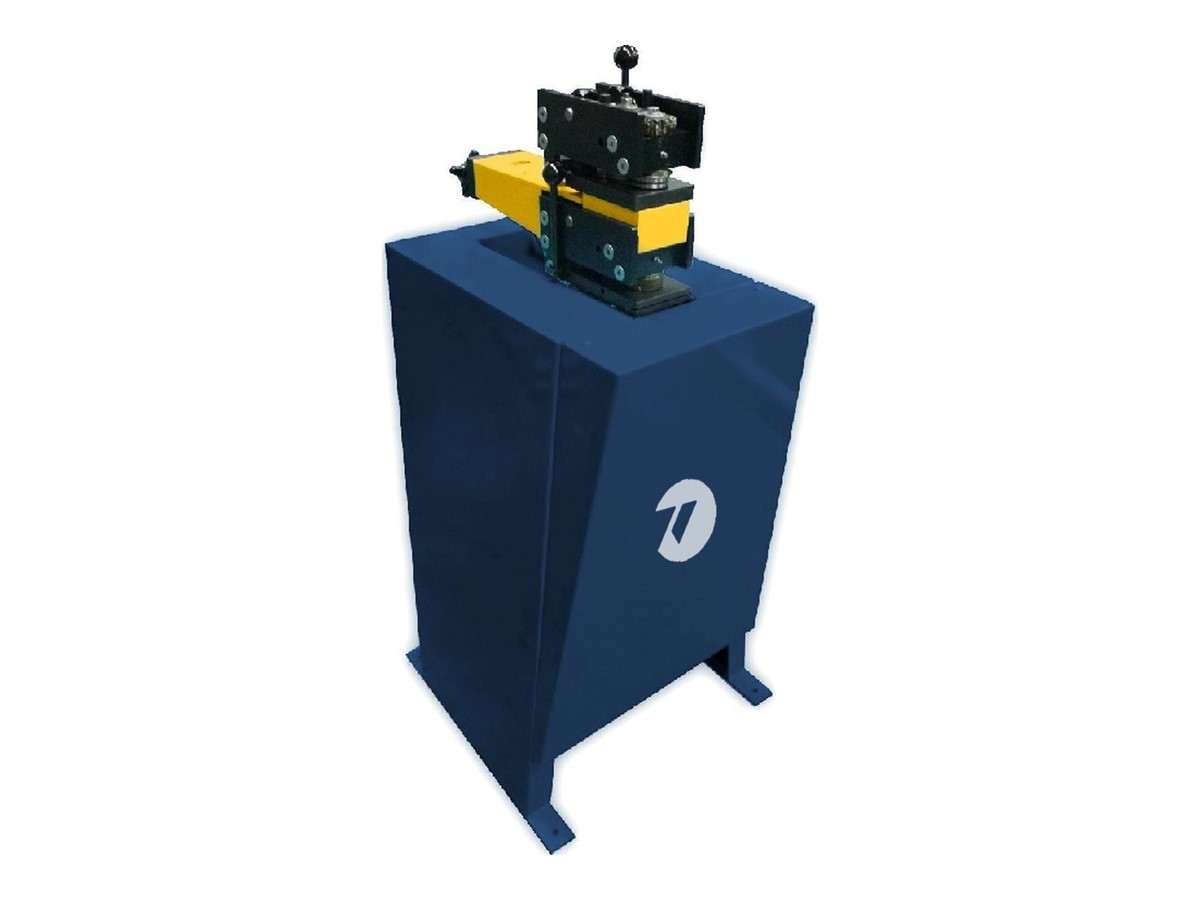
The WAMMES FP flanger forms the flange for the Pittsburgh lock up to 15 mm high on straight and curved edges of 0.7 to 1.6 mm sheet, down to a 60 mm radius; the FS forms the button punch counterpart of the snaplock on 0.5 to 1.2 mm. The outer roll swings up, so full discs can be processed too; service comes from Wiebelsheim, Germany.
- 0.7–1.6 mmSheet thickness FP (FS 0.5–1.2 mm)
- up to 15 mmFlange height FP
- from 60 mmRadius of curved edges
- 0.37 kW4 m/min, 3 × 400 V
FP or FS?
- For RFP-5 and RFP-7
- Seam is closed afterwards
- Outer roll swings up
- For RFS-9
- Part snaps in without seaming
- Buttons pressed in while flanging
Your benefits
- Curved edges from 60 mmBends and fittings get their flange in one pass.
- Up to 1.6 mmThe FP also flanges heavy duct sheet – thicker than the flanging attachment.
- Service from WiebelsheimCommissioning, roll sets and spare parts from WAMMES.
FP flanger (Pittsburgh lock)
FS flanger (snaplock)
Drive
Sheet thicknesses as stated by the manufacturer; the details in the quotation are binding.
The FP flanger forms the flange for the Pittsburgh lock, the FS the button punch flange for the snaplock – both also on curved edges. Configure the flanger here, with a rollformer if required.
In three steps to the flange
- Place The edge is guided between the rolls; the outer roll swings up for this.
- Flanging The rolls draw the sheet through at 4 m/min and raise the flange – on straight edges and on curved edges from a 60 mm radius.
- Buttons (FS) On the FS the buttons are pressed in during flanging – the part later snaps into the snaplock pocket.
How it works
The flange is the counterpart of the longitudinal seam on curved edges: on bends and fittings it fits into the pocket of the Pittsburgh lock or snaplock of the adjoining part.
- FP: flange up to 15 mm high for the Pittsburgh lock, 0.7–1.6 mm; the seam is then closed.
- FS: button punch flange for the snaplock, 0.5–1.2 mm; the part snaps in without seaming.
- Pocket: on the RFP-5, RFP-7 or RFS-9 rollformer.
Profiles with dimensions are listed under Technical data.
Options
- Autoguide – guides the sheet and keeps the flange height constant.
- Other versions – on request.
Scope of supply
- Flanger with gear motor in the housing
- Hardened working parts
- Powder-coated housing
- FP: outer roll swings up – also full discs
Equipment as ordered, e.g. autoguide.
In use
Tap a field for the explanation.
Rectangular fittings Bends, transitions, branches
Flange on all curved edges of bends and fittings.
Addition to the rollformer Without flanging attachment
Where the rollformer has no flanging attachment or heavier sheet up to 1.6 mm is used.
Does the flanger suit your production? Tell us the seam type, sheet thickness and smallest radii – we configure the flanger.
Request a quoteAgree the seam
We advise you on profile, additional side and flanging attachment.
- advice on roll sets and installation
Frequently asked questions
Click a question to see the answer. Click again to close it.
Flanger or flanging attachment?
The flanging attachment sits on top of the rollformer and flanges up to 1.0 mm. The FP flanger is a separate machine and flanges up to 1.6 mm. Both together are possible.
What are the buttons on the FS for?
The buttons snap into the snaplock pocket and hold the parts together without seaming.
Do you take my old machine in part exchange?
Yes, talk to us. We inspect your old machine and make you an offer.
Where do service and spare parts come from?
From WAMMES in Wiebelsheim, Germany.

Mathias Wammes
CEO & Sales

Dmitri Lang
CEO & Technical Support
